Upper Limb Prosthetics

What is an upperlimb prosthesis?

An upper limb prosthesis replaces or supports the function of a missing shoulder, arm, wrist, hand, or finger, helping you move, reach, grasp, and do more independently.
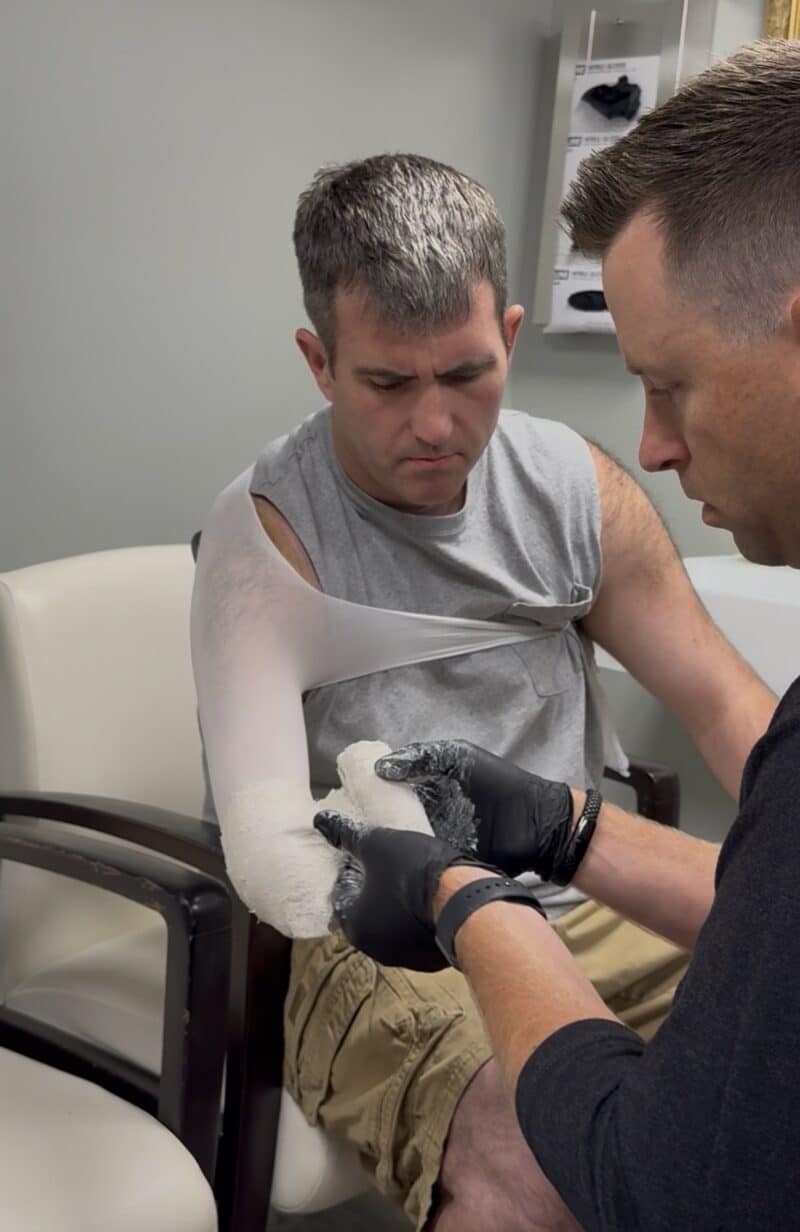
We shape the socket to your residual limb, then choose the components and control system with you based on how you move and what you want to do.
You may be a fit if…
Advanced bionics, sturdy body-powered devices, and natural-looking cosmetic fingers, hands, or arms increase your independence and comfort in daily activities, sports, and work tasks.
-
Work-place injury, motor vehicle, or traumatic injury has caused upper limb amputation.
-
Cancer, vascular disease, or a serious infection required amputation.
-
Your existing prosthesis no longer meets your needs because of changes in your anatomy, comfort, or functional requirements.
-
You are looking for a secondary prosthesis designed for specific sports and activities that are difficult to perform with your everyday prosthesis.

-
Yes, many insurance plans provide coverage, but it varies by plan and by state. We work with all major insurers. Contact us to learn more about your options.
-
Yes, depending on your prosthesis. Some prostheses are specifically designed for lifting and heavy-duty work. Talk with your prosthetist before increasing activity to make sure your device can handle the added weight and stress.
-
Yes. Wearing a prosthesis may help reduce phantom limb pain and residual limb pain, along with other pain-management techniques.
-
The weight varies depending on the size and components. A prosthetic arm or hand can range from a few ounces (finger prosthesis) to four pounds (full arm length prosthesis).
Upper limb prosthetic types by anatomy
Partial finger prostheses
Multidigit prostheses
Partial hand prostheses
Wrist disarticulation prostheses
Elbow disarticulation prostheses
Above elbow prostheses
Shoulder disarticulation prostheses
Forequarter prostheses
Upper limb prosthetic types by function
Passive prostheses
Body-powered prostheses
Myoelectric prostheses
Externally powered prostheses
Hybrid prostheses
Activity-specific upper limb prostheses
Sports prostheses
Work & vocational prostheses
Recreation prostheses
Swimming prostheses
Cycling prostheses
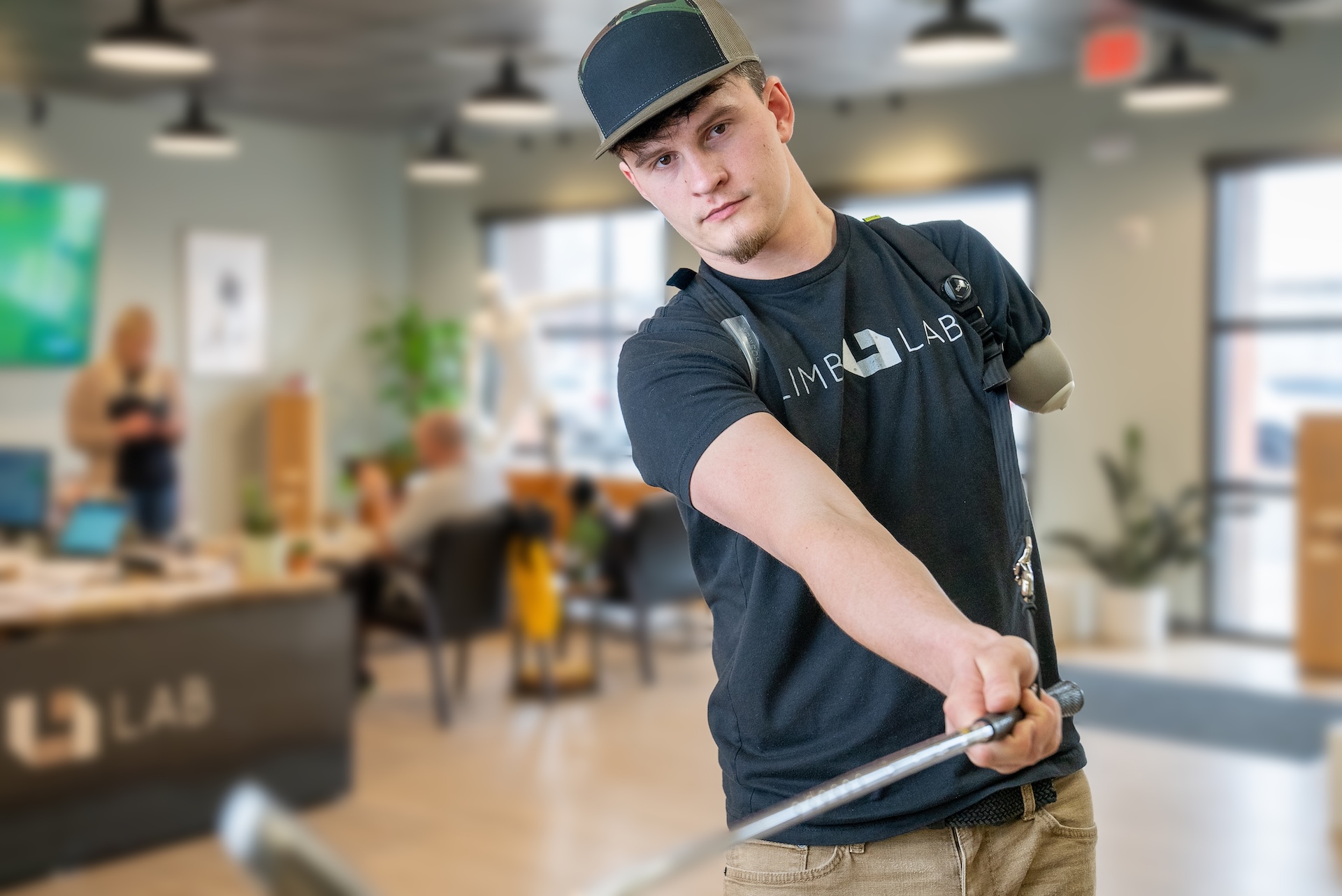
Golf prostheses
Fishing prostheses
Weightlifting & fitness prostheses
Tool & equipment attachments
Musical instrument prostheses
Specialized terminal devices



Device overview
Upper limb prostheses vary in design and how they are controlled, depending on your amputation level, functional needs, and daily activities.
Muscle signals from your residual limb control a built-in computer to perform motorized movements, grips, or actions.

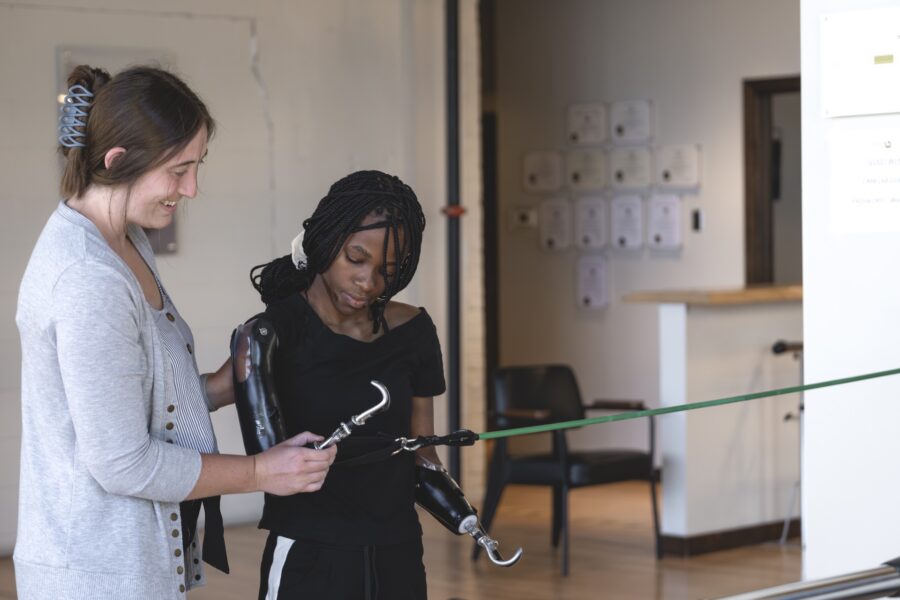
Body movements control the motion and function of the device, typically with a harness and cable system. Often more durable than myoelectric devices.

Designed and crafted for a personal activity or workday that is difficult to perform with general-use devices.